

Defending Medicaid in Georgia
What is the issue?
Georgia’s Medicaid program and the state’s broader health care system face serious risk from two sources:
- The new federal tax and budget bill (called H.R.1 or “One Big Beautiful Bill”)
- The expiration of enhanced premium subsidies that helped lower premium costs for Americans from 2021–2025
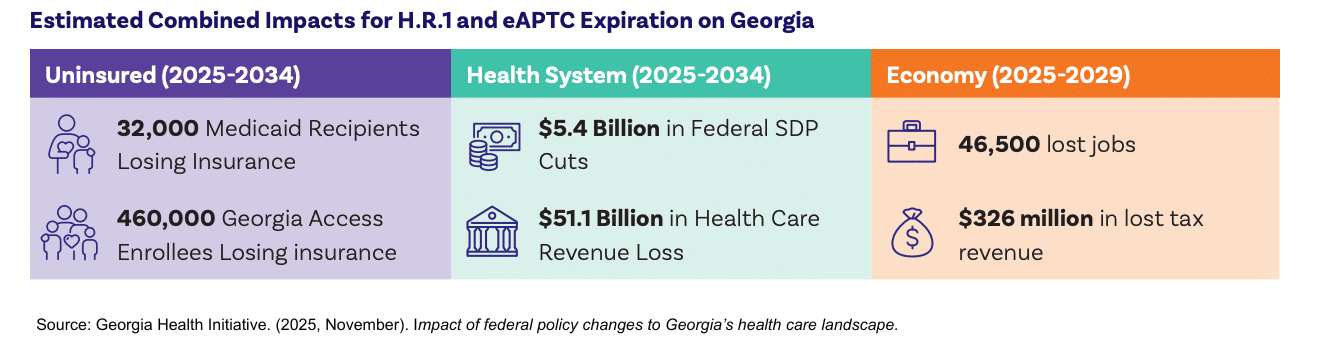
- Nearly 500,000 Georgians will lose health coverage
- Health care providers will lose $51.5 billion in revenue
- Unpaid medical care costs could rise by $10.5 billion
- Tens of thousands of health care jobs could be lost
- State and local tax revenues could decline
- Communities with limited access to care would experience the greatest harm, including many rural areas
This is more than a health care issue. It is a threat to Georgia’s economy and community stability.
These impacts will be felt statewide. Access to care, hospital stability, and economic security are all at risk, especially in communities that have experienced long-term disinvestment and already have fewer health care resources.
Georgia lawmakers can act to protect coverage and stabilize the system.
Want to review the data behind these projections?
Request the data and analysisSee the impact by community
Coverage changes and health care impacts will be felt differently across Georgia. Local data can help show what these changes mean for your community.
Want to understand what coverage looks like in your county currently?
Find your county’s fact sheetWhat Georgia lawmakers can do now
Georgia still has options to protect health care access and limit disruption. State leaders should take this information to their leadership and colleagues and call for action to shore up Georgia's health care system during the 2026 legislative session.
1. Close Georgia’s coverage gap
- Reduce unpaid medical care
- Support hospitals and clinics during and after the state-directed payment programs are reduced
- Strengthen the health care workforce
- Keep Georgians with low incomes covered as private insurance becomes unaffordable
2. Fix Medicaid capacity and systems
- Invest in staffing and retention at Medicaid and DHS
- Improve application and renewal systems
- Address backlogs
- Prevent eligible people from losing coverage due to administrative problems
3. Protect care and supports for children and adults with disabilities
- Maintain and strengthen Medicaid funding for people with disabilities
- Increase transparency and accountability in Medicaid managed care
- Eliminate the Home- and Community-Based Services waiver waiting list and keep it at zero
A more detailed version of these Medicaid policy priorities is available here .
4. Protect affordability in Georgia Access
- Premium assistance
- Support with deductibles and copays
- Targeted help for regions with higher health care costs and for older adults
5. Strengthen Georgia’s reinsurance program
- Reduce costs for consumers
- Protect small businesses and working families
- Improve market stability statewide
These policy options are informed by Georgia-specific data and projections.
Request the data and analysisHow others can help
Community leaders and influencers
Health professionals, faith leaders, educators, and advocates can help by sharing:
-
Research findings and local data with their lawmakers and community networks.
Request the data and analysis here , including projections broken down by economic development region. -
Want to understand what coverage looks like in your county? Download your county's fact sheet to see how many people are uninsured
and how closing the coverage gap could improve access to care.
These tools are useful for:- Legislative meetings
- Community discussions
- Advocacy and outreach
- Sharing data on social media or elsewhere
Community members
Your voice matters. Tell your lawmaker:
- What Medicaid and/or Georgia Access means to you
- How paying more for coverage or losing coverage would affect your family, household, work, or health
- Why lawmakers should act to protect access to care
Learn more
More about the issue
How federal policy changes impact Georgia
- Reduce federal support for Georgia’s Medicaid program
- Create new administrative barriers that cause coverage disruptions
- Add strain to an already underfunded and understaffed Medicaid system
- Increase uncompensated care for hospitals and clinics
- Push people out of private insurance as costs rise
- Put rural hospitals and health systems at greater risk of cutting services or closing
The combined effect is clear. Fewer insured Georgians, higher health care costs, and greater instability across the health care system.
The numbers Georgia cannot ignore
- Nearly 500,000 Georgians will lose health coverage
- Health care providers will lose $51.5 billion in revenue
- Unpaid medical care costs could rise by $10.5 billion
- Tens of thousands of health care jobs could be lost
- State and local tax revenues could decline
- Communities with limited access to care would experience the greatest harm, including many rural areas