
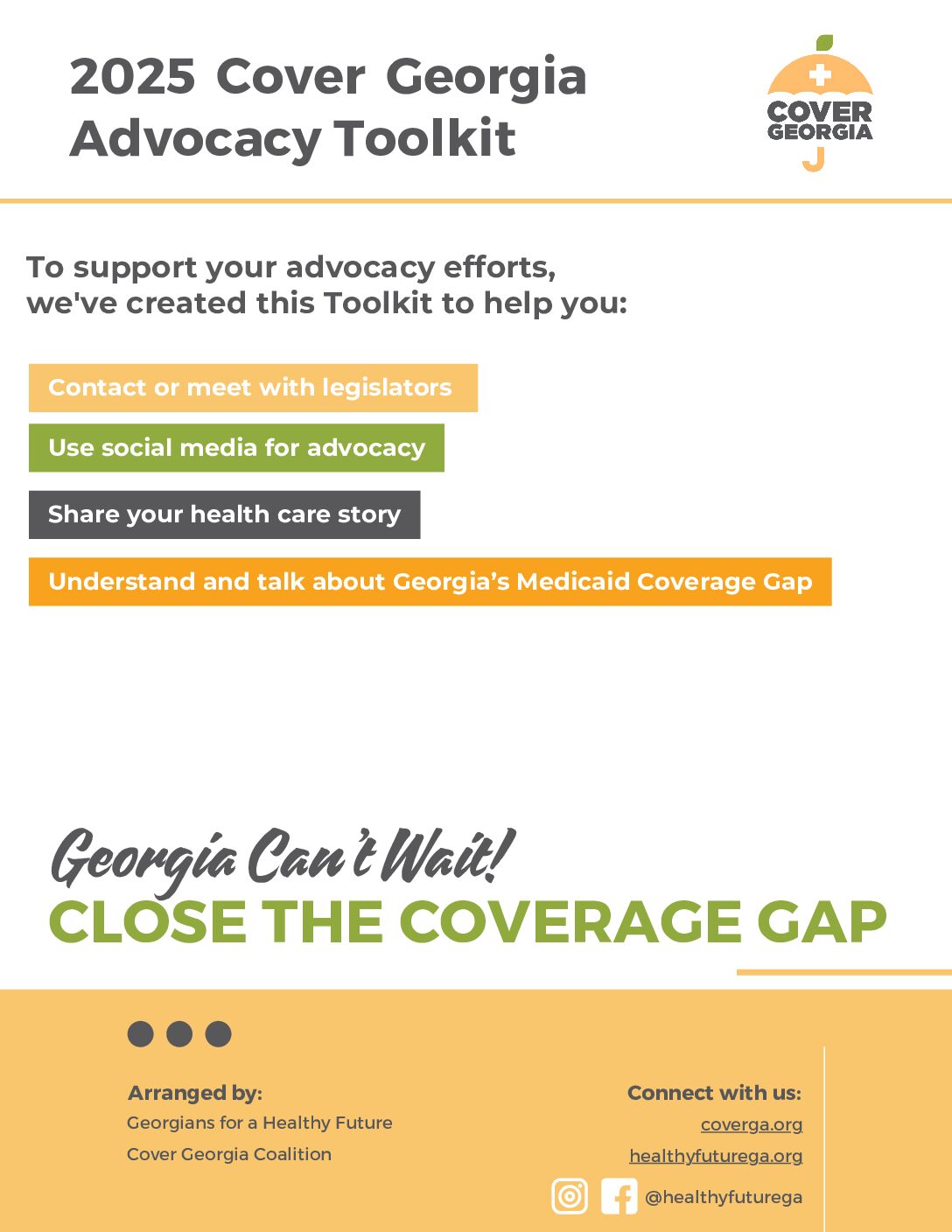
Empower Your Advocacy: The 2025 Cover Georgia Toolkit to Close the Medicaid Coverage Gap
The 2025 Cover Georgia Advocacy Toolkit is a comprehensive resource designed to equip Georgians with the tools, data, and confidence to advocate for Medicaid expansion in Georgia. Whether you are preparing to meet with your state legislator, sharing your health care story, or raising awareness about the coverage gap in your community, this toolkit provides practical guidance to help you make a meaningful impact.
Georgia continues to have one of the highest uninsured rates in the country. More than one million Georgians lack health coverage, and hundreds of thousands fall into the Medicaid coverage gap — earning too much to qualify for traditional Medicaid but too little to afford private insurance. Closing the coverage gap would expand access to affordable health care, strengthen rural hospitals, create jobs, and support working families across the state.
This toolkit was created to help advocates clearly and effectively communicate why Georgia should fully expand Medicaid.
What’s Inside the Toolkit
The Cover Georgia Toolkit includes step-by-step guidance and ready-to-use resources to support effective legislative advocacy:
Legislative Meeting Guide
Learn how to prepare for, conduct, and follow up after meetings with state lawmakers. The guide walks you through researching your legislator’s voting history, preparing key talking points, and confidently sharing your story. It also outlines best practices for respectful dialogue, active listening, and providing helpful follow-up materials such as fact sheets.
Key Messages About Medicaid Expansion in Georgia
Access clear, data-driven talking points about Georgia’s uninsured crisis, the coverage gap, and the limitations of the Georgia Pathways to Coverage program. These messages explain how expanding Medicaid would:
-
Provide health coverage to approximately 400,000 Georgians
-
Draw billions in federal funding into Georgia
-
Support rural hospitals and providers
-
Create tens of thousands of jobs
-
Help working families access preventive care and prescriptions
The toolkit includes statistics and evidence you can reference when speaking with policymakers, writing letters to the editor, or educating others about Medicaid expansion in Georgia.
Sample Conversation Guide
If you’re unsure how to structure a meeting, the toolkit includes a sample script to help you introduce yourself, state your purpose, share a personal or professional story, and clearly articulate your policy request. It emphasizes the importance of dialogue, listening carefully to your legislator’s response, and documenting key takeaways to share with advocacy partners.
Storytelling Support
Personal stories are powerful tools in health care advocacy. The toolkit provides guidance on how to connect your lived experience — whether as a patient, parent, provider, or small business owner — to broader policy solutions. By illustrating how the coverage gap affects real people, you help lawmakers understand the human impact behind the numbers.
Advocacy Follow-Up Tools
Effective advocacy does not end when the meeting concludes. The toolkit offers practical steps for sending thank-you notes, providing leave-behind materials, maintaining communication with legislative offices, and continuing the conversation throughout the session.
Why Medicaid Expansion Matters in Georgia
Georgia is one of the few states that has not fully expanded Medicaid. Instead, the state implemented Georgia Pathways to Coverage, a limited program with work reporting requirements that has enrolled far fewer people than initially projected while costing taxpayers significant resources.
Full Medicaid expansion would close the coverage gap with a more stable and comprehensive approach. Research shows that expansion improves health outcomes, reduces medical debt, supports the health care workforce, and strengthens local economies. Rural communities would particularly benefit from increased financial stability for hospitals and clinics.
For working families, closing the coverage gap means access to preventive care, mental health services, maternity care, and prescription medications without facing overwhelming costs.
Your Voice Matters
Policy decisions are influenced by constituents who speak up. Lawmakers need to hear directly from the communities impacted by Georgia’s health coverage choices. By using this toolkit, you can advocate effectively and strategically for policies that expand access to affordable health insurance.
Together, we can close Georgia’s Medicaid coverage gap, strengthen the state’s health care system, and ensure more Georgians have access to the care they need.